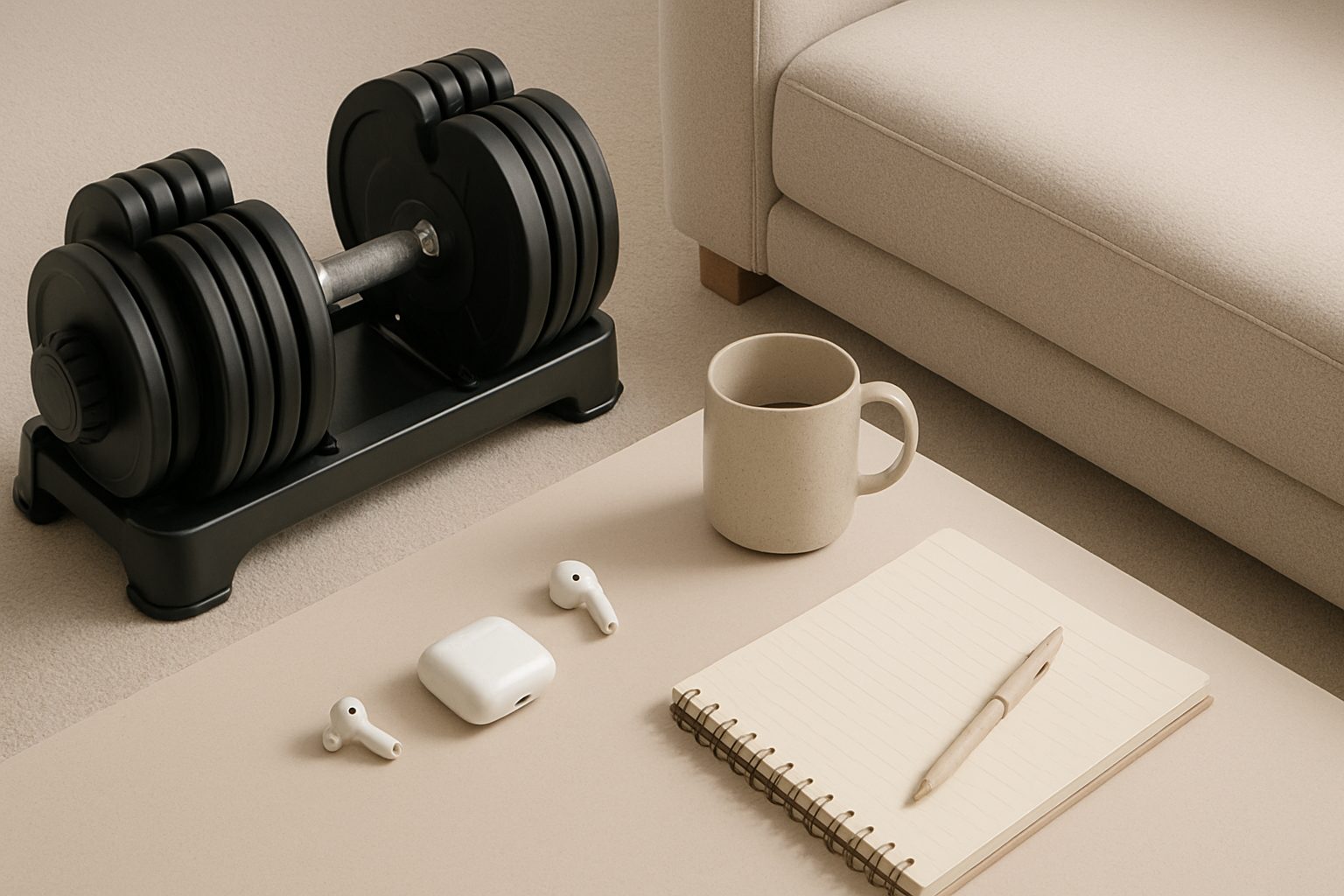
How to Set Up a Home Gym in a Spare Bedroom UK (Dumbbell-First Approach)
A spare bedroom is one of the best rooms in your home to convert into a dedicated gym space. Unlike a garage that demands insulation work or a living room where equipment clashes with sofas, a bedroom offers climate control, privacy, and a blank canvas. If you're building around dumbbells—the most versatile, space-efficient strength tool—a good rack system becomes the centrepiece of the entire layout.
Why a Spare Bedroom Works
You already have climate control and carpet or laminate flooring. The walls are finished. There's a door you can close. Most UK spare bedrooms measure 3m × 3.5m or larger, which is genuinely enough for a functional dumbbell setup without feeling cramped. Compare that to a garage where you're fighting condensation or a garden shed requiring a summer extension.
The key constraint isn't usually space—it's planning where everything lives so the room feels purposeful rather than cluttered.
Measure Your Room Properly
Start with a tape measure and a notepad. Measure length, width, and ceiling height. Note any features: radiators, skirting boards, built-in wardrobes, windows, or electrical sockets. A ceiling height of 2.4m is fine for most dumbbells and movements. If you have sloped ceilings, measure the low points.
Once you know the floorplan, sketch a rough layout. Most people discover their room is bigger than it feels. A 3m × 3.5m bedroom is 10.5 square metres—enough for a dumbbell rack, a small bench, and movement space.
Flooring: Protect and Define
Original carpet or laminate will show marks, dents, and stains within weeks. Invest in flooring protection. Rubber tiles or interlocking foam mats (0.5–1m²) are the standard. They're affordable (£150–400 for full coverage), roll up easily if you move, and absorb impact if you drop dumbbells.
Alternatively, a few layers of plywood under your rack can protect the floor beneath while keeping the rest of the room clear. The visual boundary also helps psychologically—it defines the gym zone.
Use light grey or black mats if you're renting; they hide dust and look neutral if anyone visits.
Mirror Placement: Practical, Not Vanity
A large mirror (1.2m × 0.6m minimum) on one wall helps you check form and makes the room feel larger. Don't assume you need an expensive dance studio mirror. A standard bathroom mirror kit from B&Q or Screwfix costs £30–80 and works fine for dumbbells. Mount it at shoulder height so you can see your upper and lower body while standing 1.5m away.
If your walls are rented, adhesive-backed mirrors are reversible and reliable. Position it opposite your main movement area so you can see yourself during lifts.
Dumbbell Rack Placement: The Centre of Your Layout
Your rack is the anchor point. Most compact racks occupy roughly 1.5m × 0.5m, though wall-mounted models reduce that footprint significantly.
Freestanding racks work best positioned along a wall where they don't block natural movement. Place it perpendicular to your mirror so you can glance at form without twisting. Leave at least 1m of clearance in front (for picking up/putting down dumbbells safely) and 0.5m on the sides.
Wall-mounted racks are ideal for small bedrooms. They free up floor space, sit at a fixed height, and keep dumbbells compact. Mount them at waist-to-chest height (roughly 1.1m–1.3m from the floor) so you're not reaching awkwardly. Ensure the wall can take the weight—solid brick or concrete is best, but good cavity fixings work in standard stud walls if you hit the studs.
The trade-off: wall-mounted racks are less flexible if you want to adjust dumbbell spacing or move them later.
Weight and Dumbbell Storage
If you're starting with adjustable dumbbells (the compact plastic or spinlock kind), a rack becomes less critical—they take up little space. But if you're buying fixed dumbbells, a proper rack prevents the bedroom feeling like a storage unit.
A typical 5-dumbbell pair (2–10kg) occupies about 0.4m of rack space. Space dumbbells close together on the rack to keep the footprint tight, but leave enough gap that you can grip them without banging your knuckles.
Bench and Movement Space
Reserve a corner or the wall opposite your mirror for a workout bench if you plan pressing movements. A folding bench (£80–150) can lean against the wall when not in use. This keeps the centre of the room open for exercises requiring space: goblet squats, rows, or anything needing arm extension.
The golden rule: your largest empty space should be in the direction your mirror faces. That's where you'll do most movements.
Ventilation and Temperature
Spare bedrooms can get stuffy. Open a window before you exercise, or leave a small desk fan running during workouts. Your body will generate heat quickly, and stale air makes the space feel unpleasant. In winter, you'll appreciate having climate control rather than a freezing garage.
Final Walkthrough
A properly planned spare bedroom gym has the rack positioned against one wall (ideally near a corner), flooring protection underneath and extending 1m in front, a mirror on the opposite wall, and the remaining space reserved for movement or a bench. This layout keeps the room purposeful without looking like a warehouse.
You'll use it far more consistently than a garage setup because you'll encounter fewer barriers—no weather, no temperature shocks, and immediate access from the main house. That consistency over weeks and months compounds far more than the specific equipment you own.
More options
- Mirafit 3-Tier Dumbbell Rack (Amazon UK)
- Body Power Dumbbell Rack (Amazon UK)
- Wall-Mounted Dumbbell Holder Bracket Set (Amazon UK)
- Rubber Hex Dumbbell Set with Rack (Amazon UK)
- Adjustable Dumbbell Stand / Cradle (Amazon UK)