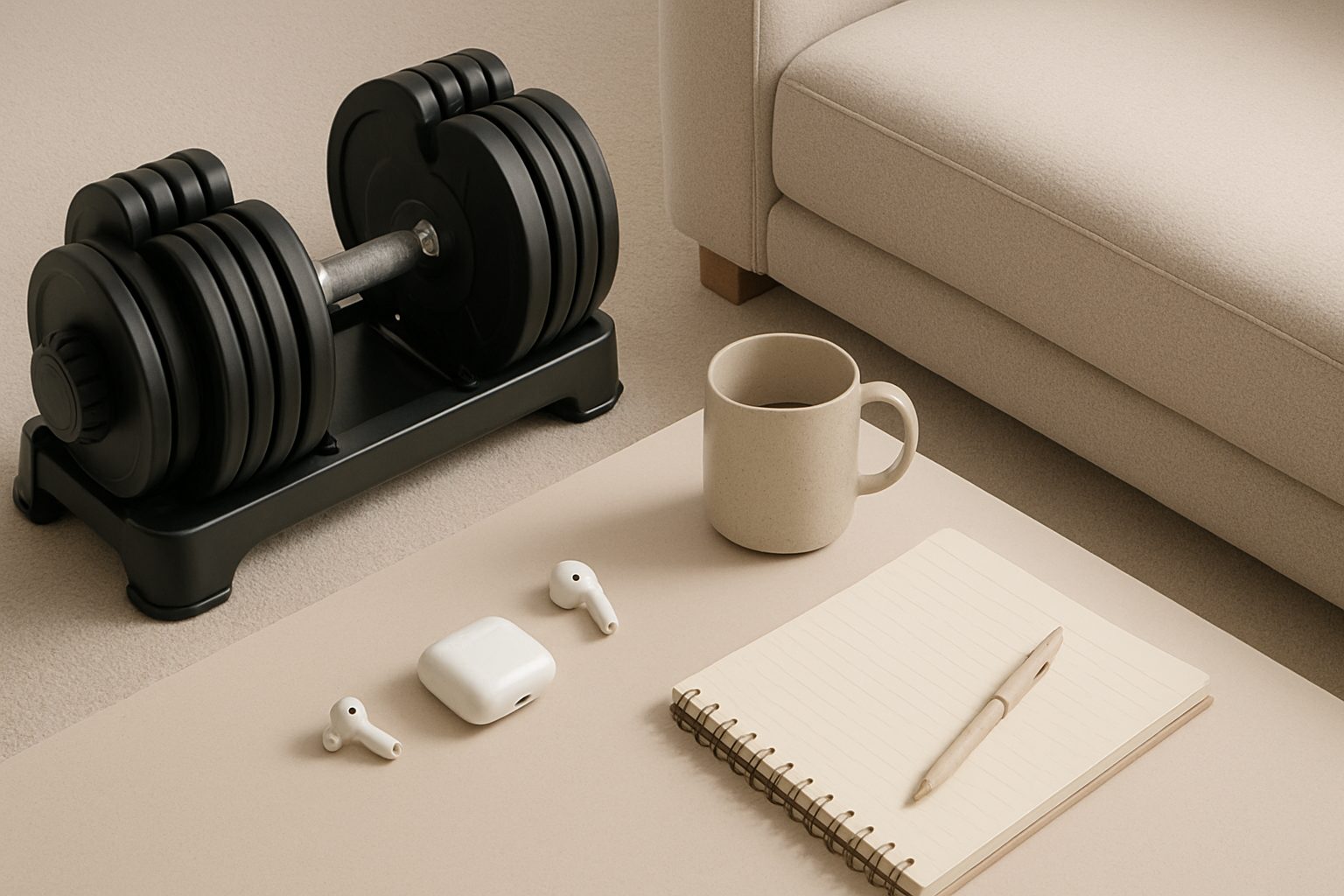
How to Organise Dumbbell Storage in Your Home Gym (UK Guide)
If you've invested in a set of dumbbells, you'll quickly discover that having them scattered across your gym floor or stacked haphazardly in a corner undermines both safety and workout efficiency. Proper dumbbell storage isn't just about aesthetics—it protects your weights, maximises your training space, and keeps your workouts flowing without interruption. In a country where many home gyms operate from cramped spare bedrooms or garages, finding the right storage solution can genuinely transform how you use your equipment.
Why Dumbbell Storage Matters More Than You'd Think
A disorganised dumbbell setup costs you time between sets and increases injury risk. When weights are loose, you're more likely to trip, drop something heavy on your foot, or accidentally grab the wrong weight mid-set. Beyond safety, proper storage protects your investment. Dumbbells left on cold concrete or dampness-prone floors will rust faster, especially the cheaper cast-iron varieties common in UK home gyms. Finally, there's the psychological factor—having your weights neatly organised actually makes you more likely to stick to your training schedule, rather than viewing your gym as a chaotic pile.
Types of Dumbbell Storage Solutions
Vertical Dumbbell Racks
Vertical racks are the most popular choice for UK home gyms because they're efficient with floor space. These typically hold dumbbells upright on a frame with angled slots or pegs. A good vertical rack takes up roughly 60–90cm of floor space and can hold anywhere from six to 20 pairs, depending on the model. The advantage is instant visibility and accessibility—you can see every weight at a glance and grab what you need without moving other dumbbells. The downside is they're not suited to very heavy weights; some cheaper models flex under the weight of a full set above 25kg per hand.
Horizontal Storage Systems
Horizontal racks look similar to old-fashioned barbell racks but lie flat. They use multiple tiers or shelving to store dumbbells side by side. These work brilliantly if you have limited ceiling height (common in UK basements and converted garages) and can actually be sturdier for very heavy weights. The trade-off is floor space; they're wider than vertical racks and slightly less space-efficient.
Wall-Mounted Solutions
Wall-mounted racks are ideal if your floor space is precious. These bolt directly to your wall using heavy-duty brackets and can hold a surprising amount of weight. The best wall-mounted systems have a slight forward tilt so dumbbells don't slide off. They keep your floor completely clear for other equipment like rowing machines or floor exercises. The installation requires marking studs, drilling, and ideally using proper masonry anchors on UK plasterboard walls, but the space savings are worth it—especially in smaller gym rooms.
Compact Tiered Storage
Some compact tiered systems combine horizontal and vertical elements, stacking dumbbells in rows at different heights. These are brilliant space-savers for modest sets (up to 10 pairs) and work well in garages or converted spare rooms. They're typically cheaper and easier to move if you rearrange your gym layout.
Choosing the Right System for Your Space
Start by measuring your available floor space and ceiling height. UK garages vary wildly—some are barely taller than 2 metres, ruling out tall vertical systems. Consider how many dumbbells you currently own and whether you're likely to expand your set. A 12-pair vertical rack should comfortably last you years without forced upgrades, whereas a four-pair compact system might feel restricting once you progress.
Think about your weight range too. If you're using 5kg to 20kg dumbbells, almost any system will work. If you're regularly handling 30kg+ pairs, you'll want either a robust horizontal system or a wall-mounted solution; cheaper vertical racks sometimes develop a wobble under heavy loads.
Finally, assess your floor. Concrete garage floors are ideal—mount anything you want. Carpeted bedroom floors are problematic for heavy racks; the weight can create permanent dents. In this case, a wall-mounted solution or a system with a wide, flat base becomes essential.
Smart Organisation Within Your Rack
Whichever system you choose, arrange dumbbells in ascending or descending order by weight. This eliminates hunting and prevents the annoying moment when you instinctively grab the wrong pair mid-set. Some people prefer lightest on top (for speed-focused sets), others prefer heaviest on the bottom (following the logic that your strongest lifts come first). Both work; consistency matters more than philosophy.
If you have pairs that see vastly different use—say, heavy 32kg dumbbells for bench presses but light 6kg pairs for shoulder work—consider clustering them by movement or muscle group rather than pure weight order. This speeds up warm-up progressions and keeps your training flow natural.
Space-Saving Tweaks
In very tight spaces, a wall-mounted rack combined with a small horizontal system underneath can give you dual capacity without dominating the room. Some people successfully use pegboard walls with custom-cut holes to cradle dumbbell ends, though this works better for lighter weights and isn't easy to adjust.
Keep the floor directly in front of and around your storage clear. You'll want space to set dumbbells down between sets, and you need a quick escape route if something shifts unexpectedly.
Maintenance and Safety Considerations
UK damp climates mean rust is a genuine concern. Check your dumbbells monthly for oxidation, especially if your garage isn't heated. A quick wipe with an oily rag keeps cast iron healthy. Rubber-coated dumbbells are more resistant to the damp but cost more upfront.
Secure wall-mounted racks properly; there's no shortcut here. A rack that pulls away from plasterboard under stress is dangerous. Use the right anchors for your wall type, and if you're unsure, ask a handy neighbour or a tradesperson—it's a cheap insurance policy.
Check your rack regularly for wobbles, bent pegs, or surface rust. Most quality systems last years with minimal maintenance, but early identification of problems prevents accidents.
---
Getting your dumbbell storage right from the start saves frustration and protects your investment. Whether you choose a vertical rack, wall-mounted system, or horizontal storage depends on your space constraints and weight range, but the principle remains the same: accessible, organised, and secure. Once you've found your solution, you'll notice your training sessions flow more smoothly, and your gym space feels genuinely functional rather than cluttered.
More options
- Mirafit 3-Tier Dumbbell Rack (Amazon UK)
- Body Power Dumbbell Rack (Amazon UK)
- Wall-Mounted Dumbbell Holder Bracket Set (Amazon UK)
- Rubber Hex Dumbbell Set with Rack (Amazon UK)
- Adjustable Dumbbell Stand / Cradle (Amazon UK)