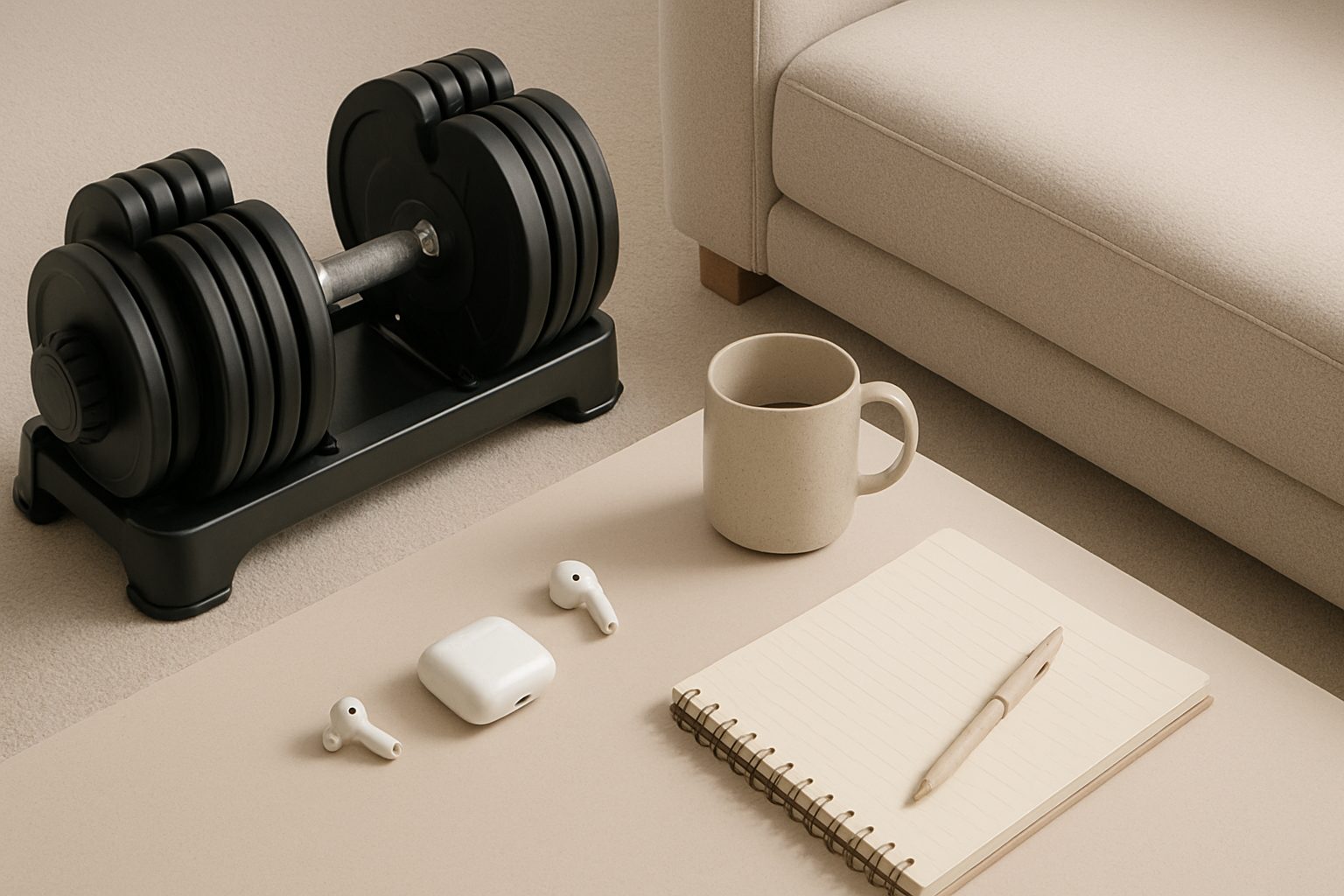
Best Space-Saving Dumbbell Storage Solutions for UK Home Gyms 2026
Building a home gym in a UK flat or terraced house means making every square foot count. Dumbbells are essential for strength training, but they're bulky and awkward to store. Unlike a barbell that can hang on a wall bracket, a dumbbell collection sprawls: pairs of weights that don't stack neatly and take up valuable floor space. The right storage solution keeps them accessible, organised, and off your living room floor.
There's no single best option—it depends on your space, budget, and how many dumbbells you own. Here's what actually works.
Vertical Tower Racks
A vertical dumbbell rack is the most space-efficient approach for larger collections. These stand 1.5–2 metres tall and hold 8–20 pairs, using a footprint of roughly 40×40 cm.
What works: Tower racks maximise storage per square foot of floor space. They suit dedicated gym rooms or corners of a garage. Most designs stack dumbbells horizontally on offset pegs, so you can see and grab any weight without removing others. They're straightforward to use—no hunting through stacks—and they look intentional rather than cluttered.
Trade-offs: They need a bit of floor space (unlike wall-mounted options), and cheaper models sometimes sag or wobble under full load. You also need headroom; a standard tower rack won't fit under a low ceiling. Quality matters here—budget racks from some high-street brands are flimsy compared to branded fitness equipment.
The better options are adjustable towers that accommodate different dumbbell diameters (important if you mix hex and round weights) and have solid welds or bolted construction rather than pressed steel.
Wall-Mounted Brackets and Rails
If floor space is genuinely tight, wall mounting gets dumbbells up and off the ground. Single hooks, rail systems, or multi-peg wall-mounted bars let you store dumbbells vertically on the wall.
What works: Wall mounting uses otherwise wasted vertical space and creates a clean look. A rail system with adjustable pegs is flexible—you can space them to fit your specific dumbbells. It's a good option for 4–12 pairs and works in flats or rooms where you can't spare floor real estate. Installation is straightforward if you find the wall studs and use proper fixings.
Trade-offs: Dumbbells on a wall are heavier and bulkier than, say, resistance bands. You need solid walls and reliable fixings. There's also a psychological factor: grabbing a weight from a wall peg feels less convenient than a ground-based rack, especially during fast circuits. If your dumbbells are mismatched sizes, spacing them evenly is fiddly.
For renters, this might not be viable. Even with the right fixings, mounting 50+ kg of iron on plasterboard requires confidence your landlord won't object.
Under-Bench Storage
A weight bench with built-in dumbbell storage below or beside it combines two pieces of equipment into one footprint. Some adjustable benches have a small rack built into the frame; others sit on or alongside a dedicated dumbbell shelf.
What works: If you already own a bench, this is efficient. You're not adding bulk—the dumbbell storage integrates with equipment you'd have anyway. Some designs use magnetic clips or angled pegs that keep weights secure, which is clever for small spaces where stability matters.
Trade-offs: Most integrated storage holds 4–8 pairs maximum. Full-height under-bench racks do hold more, but they're essentially compact tower racks that happen to sit under a bench. You're also limited by the bench's dimensions; if you buy mismatched sets, they might not fit the spacing.
This works best if you're starting out and building a collection gradually, or if your space is so tight you're choosing between a bench with storage or a standalone rack.
Corner Racks and Custom Setups
Corner racks exploit dead space in room corners, angling the frame to fit the geometry. Some are hexagonal towers designed to pack into a corner rather than square against walls.
What works: Corner placement can be invisible—you're using space that's already unusable for other equipment. If your gym room is oddly shaped or a workout area in a corner of a bedroom, this makes sense.
Trade-offs: Corner racks are niche products; fewer options exist compared to standard towers. They can be harder to access if the corner is tight, and some designs are unstable or poorly engineered because they prioritise the corner fit over structural rigidity.
Honest Comparisons
For most UK home gyms with 6–12 pairs of dumbbells, a small vertical rack (1.2–1.5 m high, 6–10 pair capacity) is the best all-rounder: compact, stable, and accessible. They're under £100 from reputable brands.
Wall mounting works if you have space on a suitable wall and can commit to installation. It saves floor space but isn't as flexible or comfortable to use during training.
Under-bench storage shines if you're buying a bench anyway, but don't rely on it for large collections.
Making Your Choice
Ask yourself three questions:
- How many dumbbells do you own now, and will you add more? A tall tower is silly for four pairs; wall pegs are pointless if you're expanding to twenty pairs.
- What's your constraint—floor space, wall space, or ceiling height? This dictates which options are realistic.
- How often do you train? If dumbbells are in regular rotation, you want quick access. If they're stored for occasional use, accessibility is less critical.
The right solution feels invisible during training: you grab a weight and go. It also prevents dumbbells becoming an eyesore that makes you less keen to use your home gym. Take a few minutes to assess your actual space and collection before buying—a storage solution that suits your setup will earn its cost back by actually getting used.
More options
- Mirafit 3-Tier Dumbbell Rack (Amazon UK)
- Body Power Dumbbell Rack (Amazon UK)
- Wall-Mounted Dumbbell Holder Bracket Set (Amazon UK)
- Rubber Hex Dumbbell Set with Rack (Amazon UK)
- Adjustable Dumbbell Stand / Cradle (Amazon UK)